Random Events in Football Agent
Agency, player, and signing choices that spend cash or reputation
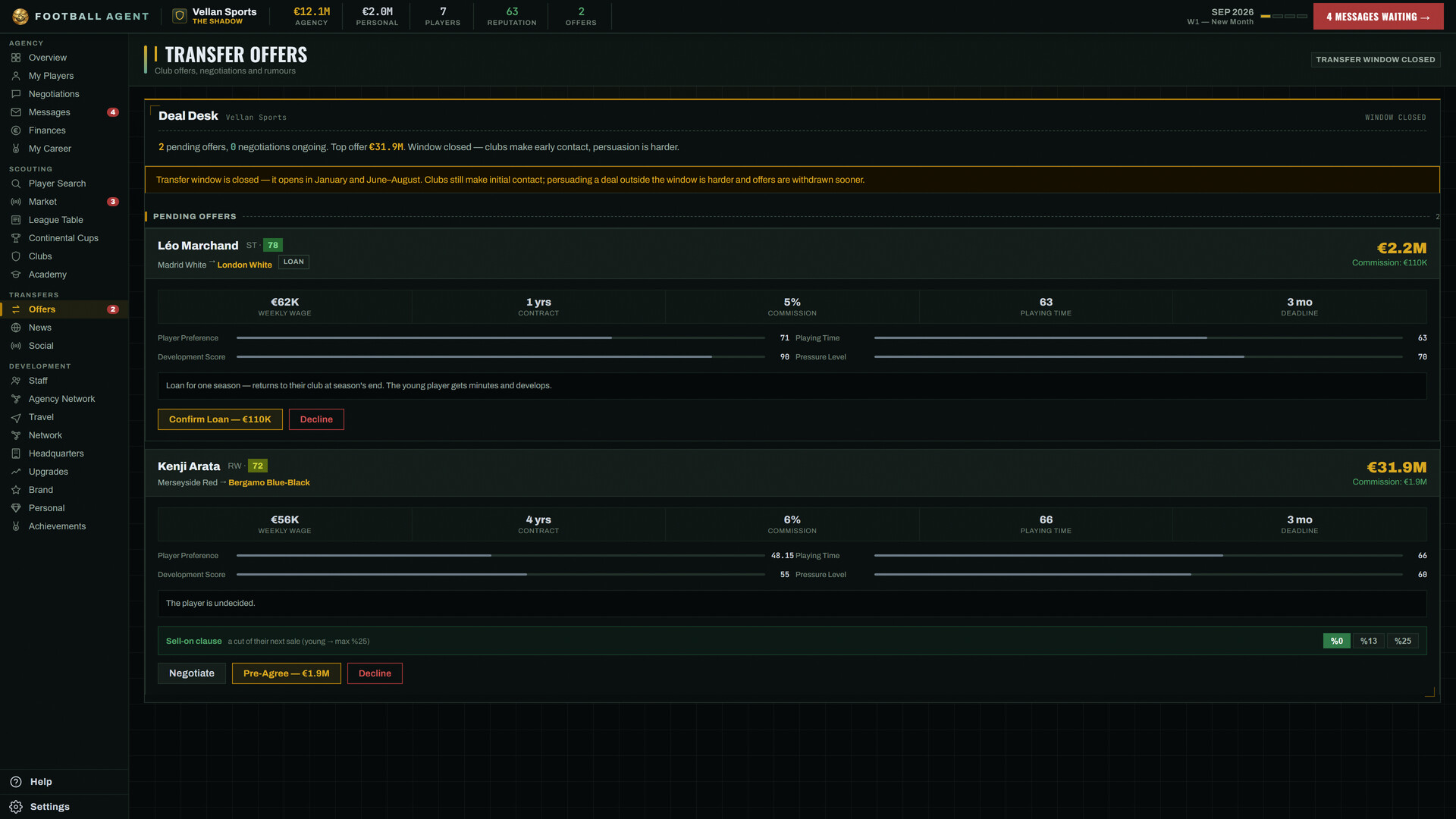
Football Agent entered Steam Early Access on 25 August 2026 as a single-player career from ATERO GAMES. Across 44 countries, 115 leagues, 1,900 clubs and 47,500 players, the calendar is not only matches and transfer windows. It also fires random events: short pop-up decisions with real costs. Some spend euros. All of them spend something — reputation, morale, trust, bond, interest, or time that a rival agent will use.
This page maps the three families of event, the lock that used to freeze a broke agency, the free-but-costly choices that replaced it, the 27 August balance that stopped the same crisis looping, and how to keep an event from ending the save. Pair it with the agency economy page: weekly operating costs and pop-ups compete for the same bankroll.
What a random event actually is
A random event is not flavour you can swipe away. Each window describes a situation and offers responses. Paid responses buy a cleaner outcome. Unpaid responses close the window without touching cash and then tax another ledger. There is no hidden “dismiss with no effect” button. If you wanted a skip, this system is not it.
Events fire while you still pay weekly operating costs. Empty the account to hire staff or chase a wonderkid, and the next window will hurt. After the hotfix you can always close it; you cannot always close it cheaply. Treat every pop-up as a mini negotiation with the world, not as an advert in front of the next match.
Agency events
Agency events concern the office, the brand, and the people who keep the lights on. Typical pressure includes a client-facing row that wants a statement or a quiet payout, headquarters trouble you can paper over with cash, or media noise you can buy down.
Neglecting the agency event is the free option after the lock hotfix. It costs reputation, not euros. Reputation is the silent multiplier on later approaches: a wonderkid comparing agents feels that chip months later. Early in a save, while you still hunt a first commission, protecting reputation can matter more than protecting a few thousand euros. One week from bankruptcy, spend nothing and accept the dent — a dead save has no reputation left to spend.
Do not confuse an agency pop-up with a structured club request. Clubs asking you to find a player belong to Club Mandates, which you answer from the market or the mandates panel. Random events are the interruptions; mandates are work you can plan. Both can drain cash in the same month, which is why the economy page and this one should be read together.
Player events
Player events sit on a named client: family pressure, a clash with a coach, a request for a loan, a demand for more playing time, a night that the press will not ignore. The paid path usually spends money on a gesture, a lawyer, or a quiet settlement. The unpaid path is to walk away.
Walking away costs morale, trust, and bond. Morale leaks into match ratings and the minutes a club is willing to give. Trust leaks into the next contract conversation. Bond is the slow stat that keeps a player on your books when another agent calls. Walking away is correct when cash is the scarce resource. It is expensive when you are about to sell, renegotiate, or promise playing time you cannot back with a club that actually needs the player.
A client who asked for a loan and was ignored will remember it when you later talk about minutes. Before you spend bond you will need next month, read how to sign clients and decide whether this name is still a priority or a backup who can absorb a colder relationship.
Signing-meeting events
Signing meetings are timed. A pop-up can ask you to travel, to sweeten a dinner, or to wait a week. The meeting is the door into the negotiation system. The event decides whether that door is still open.
Postponing the meeting is the free option. Interest drops. Rival agents move in. In a database of 47,500 players the shortlist still feels personal: the one you wanted is the one everyone else can see. If the player is a genuine target, pay or travel. If they are a backup, postponing is how you keep runway for the names that matter. Medium interest plus visible rival heat is the worst moment to wait — that is how you donate the deal.
The lock hotfix (25 August 2026)
On day one, some event windows listed only paid options. If the agency had no cash, the window could not close. The save was trapped. ATERO GAMES shipped a hotfix the same week the game entered Steam Early Access. Every event now includes a choice you can afford. That choice is free in money and costly in another currency:
- Agency event — neglect the situation → reputation falls.
- Player event — walk away → morale, trust, and bond fall.
- Signing meeting — postpone → interest falls while rivals advance.
The same hotfix also repaired untranslated labels on the decision outcome card (club relationship, player trust, media pressure, media profile, transfer rumour). Read the card. If trust dropped, do not immediately open a hard renegotiation.
27 August 2026: no-repeat and monthly cap
Players reported the same event firing again and again, which turned a story system into a tax farm. The 27 August balance pass changed two rules:
- The same event no longer repeats in the way that made a season feel stuck.
- Monthly event volume is capped, so a calendar month cannot drown you in pop-ups.
The cap does not mean events stopped. It means you can plan a reserve. You will still need cash or reputation for the ones that do fire. Check the patch notes when another pass lands — event volume is exactly the lever Early Access likes to retune.
How to budget for events
- Keep a dedicated event reserve — a few thousand euros that is not staff wages and not a transfer sweetener.
- Decide in advance which currency you can spend this month: cash, reputation, or bond. Do not spend all three in one week of pop-ups.
- After a paid choice, do not hire or upgrade until weekly costs are covered again. Starting money is about €50,000; weekly costs and events share it.
- If insolvency is closer than a commission, take the free-but-costly option. Surviving the week beats a prettier outcome card.
- Never postpone a meeting with a player whose interest is already medium and who has rival attention. Pay, or drop the target cleanly and scout elsewhere.
The monthly cap helps. It does not replace discipline. Events are why a cash cushion is not optional, even after the transfer market was rebuilt to keep fees realistic.
Treat every pop-up as a cash-flow event first and a story beat second. The August 27 cap means you will see fewer identical crises, so the ones that do fire are worth reading twice. A neglected agency event that chips reputation in September can still be echoing in January when a wonderkid compares agents. Budget a slice of the opening fifty thousand for choices you cannot skip, then rebuild the cushion from commission — not from hoping the next window stays quiet.
Frequently Asked Questions
Quick answers to the most common questions.
Can a random event still lock the game if I have no money?
No. The 25 August 2026 hotfix guarantees a choice you can afford. That choice costs reputation, morale and trust, or signing interest — not euros. You can always close the window; you cannot always close it without damage.
Should I always pay instead of taking the free option?
No. Pay when the player or the brand is a priority this month. Take the free option when weekly costs already threaten bankruptcy. Cash is the only resource that can end the save; reputation and bond can be rebuilt after the first commission.
What changed on 27 August 2026?
The same event no longer repeats in the old looping way, and monthly event volume is capped. You still get meaningful choices; you should not get farmed by the identical crisis every other day. Details live on the patch notes page.
Are Club Mandates the same as random events?
No. A mandate is a club asking you to propose a player from the market or the mandates panel. Random events are unplanned pop-ups. Both can spend money in the same month, so keep an event reserve separate from mandate travel and fees.
Does postponing a signing meeting only delay the calendar?
No. Interest falls while rival agents move in. The negotiation system never starts if the meeting dies. If the target matters, treat postponement as a commercial loss, not as a free pause.